
Buying Waterfront Property Sanibel FL: 2026 East End Guide
Months after Hurricane Ian, Gulfshore Business reported an $11.7 million record-priced home sale on Sanibel Island. Island confidence came back fast. Buying waterfront property in Sanibel FL comes down to four checks: which water you’re on, how your boat reaches open water, the home’s elevation, and the city’s shoreline rules.
Key Takeaways
- Gulfshore Business reported an $11.7 million record-priced Sanibel home sale in December 2022. Gulf-front homes sit at the top of the island’s price ladder.
- Sanibel waterfront comes in four tiers: Gulf-front beach, bay-front, Gulf-access canal, and interior freshwater along the Sanibel River and lakes.
- Under FEMA’s 50% rule, a renovation that reaches half the structure’s value can trigger a full flood-code upgrade.
- VE flood zones usually cost more to insure than AE zones because FEMA maps them for wave action.
- East End canal homes offer some of the shortest boat runs on the island to San Carlos Bay.
Market data current as of November 2026.
Types of Waterfront Properties on Sanibel Island: Gulf, Bay, and Canal
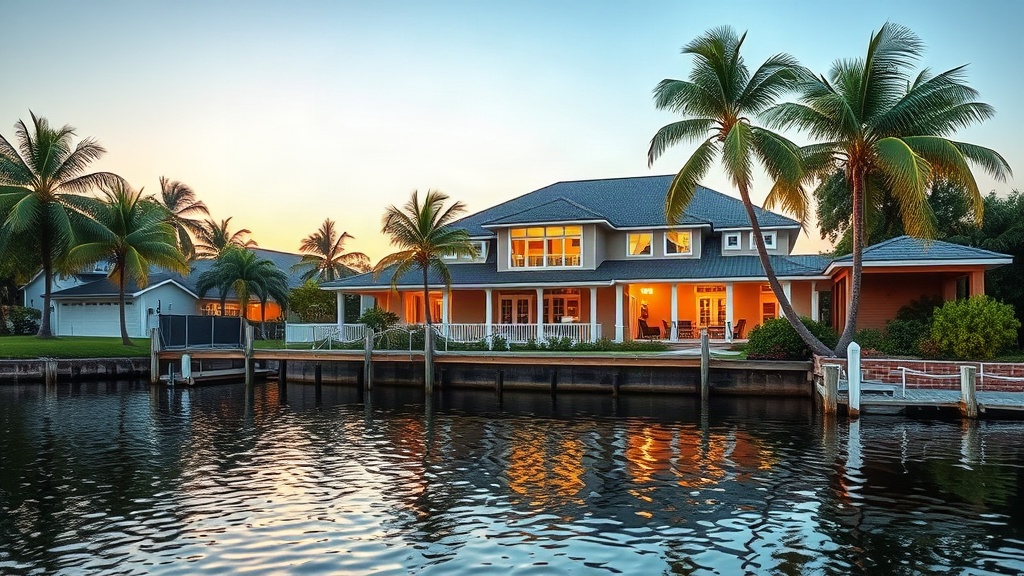

On neighboring Captiva, The News-Press reported Gulf-front properties offered at $28.75 million in February 2025. Gulf frontage carries a real premium here. Sanibel follows the same pattern, where the closer you sit to the Gulf, the higher the price and the stricter the building rules.
Sanibel Island waterfront property falls into four types: Gulf-front beach homes and condos, bay-front homes on San Carlos Bay or Pine Island Sound, Gulf-access canal homes, and interior freshwater lots. Each type differs in view, boat access, and flood zone. Gulf-front sits at the top of the price ladder.
Gulf-Front Beach Homes and Condos
Sanibel Island gulf front homes for sale line West Gulf Drive on the island’s west side and East Gulf Drive on the East End. You get the beach, the shelling, and that famous wide horizon. What you don’t get is a private dock, since the open Gulf beach is no place to tie up a boat.
Bay-Front Homes
Bay-front homes face San Carlos Bay on the East End or Pine Island Sound on the north shore. The views are wide and calm. Many of these shorelines are lined with protected mangroves and shallow grass flats, so dock length and water depth vary from lot to lot.
Gulf-Access Canal Homes
Canal homes give you a dock, a lift, and a short ride to open water. This is where most Sanibel boaters live. On the East End, canal neighborhoods such as Shell Harbor sit close to the lighthouse and San Carlos Bay, which keeps run times short.
Interior Freshwater and Sanibel River Lots
The Sanibel River and interior lakes offer quiet water, wading birds, and kayak launches. Think herons, not horsepower. These lots don’t connect to the Gulf by boat, which typically makes them the most accessible entry point to Sanibel water views.
| Waterfront Type | Boat Access | Common Flood Zone | Top Due Diligence Item |
|---|---|---|---|
| Gulf-front beach | None at the property | Often VE | Coastal setback line and elevation |
| Bay-front | Possible, depth varies | VE or AE | Mangrove permits and dock depth |
| Gulf-access canal | Yes, private dock | Often AE | Seawall condition and low-tide depth |
| Interior freshwater | Kayak and paddle only | Often AE | Shoreline buffer rules |
Flood zones are set lot by lot, so treat the table as a starting point. Always pull the exact FEMA zone for the address. Your lender and insurer will use that map, not a general rule.
How Do Boaters Get From the East End to Open Water?
The Sanibel Causeway runs about three miles from the East End to the mainland. It frames the main route into San Carlos Bay. From there, East End boaters can reach the Gulf, Fort Myers Beach, or the Caloosahatchee River without circling the island.
Buyers focused on buying waterfront property East End Sanibel FL often start here for one reason: run time. A short canal ride to the bay saves fuel and gets you fishing sooner. A long, winding canal on the island’s interior can add 20 minutes or more each way at idle speed.
Direct Deep Water vs. Restricted Canals
Not every canal fits every boat. Some routes pass under fixed bridges that limit sailboats and larger boats with towers. Others have shallow spots at low tide, especially near the bay entrances where sand and grass flats build up.
- Ask for low-tide depth at the dock, not just at high water. Have a marine surveyor or local captain confirm it.
- Trace the full route from the dock to open water and note every fixed bridge and its clearance.
- Match your boat’s draft and height to the shallowest and lowest point on that route.
- Check the lift’s capacity against your boat’s weight, plus fuel and gear.
- Ask about no-wake and manatee zones that slow your trip in season.
Sanibel boat access depends on three things: low-tide depth, fixed bridge clearance, and run time to open water. East End canal homes near San Carlos Bay typically offer the shortest trips. Before buying, trace the full route and match it to your boat’s draft and height.
Critical Due Diligence: Seawalls, Docks, and City Environmental Regulations
Sanibel became a city in 1974, largely so residents could control growth. Its Sanibel Plan still shapes what owners can build, trim, or rebuild near the water. That protection is part of why the island feels so natural, and it’s why your due diligence goes deeper here.
What to Inspect on a Seawall
On a canal home, the seawall usually belongs to you. So does the repair bill. Hire a licensed marine contractor during your inspection period, separate from your home inspector.
- Cracks, bowing, or leaning in the wall panels
- Damage to the concrete cap along the top
- Sinkholes or soft spots in the yard behind the wall, a sign of soil loss
- Clogged weep holes that trap water pressure
- Condition of dock pilings, decking, and the boat lift motor
Mangroves and Shoreline Buffers
Mangroves are protected under Florida law, and Sanibel adds its own local rules. You can’t simply clear them for a better view. Trimming requires the right permits, and removal is rarely allowed, which matters if you picture a wide-open bay vista.
Gulf-front lots add another layer. Many sit seaward of Florida’s Coastal Construction Control Line, which brings state permitting for new construction and major work. Sanibel also limits building near shorelines, so ask what setbacks apply before you plan a pool or addition.
Important: Ask the seller for every dock, seawall, and mangrove permit on file, and confirm them with the City of Sanibel before your inspection period ends.
Sanibel waterfront due diligence covers more than the house. Buyers should hire a marine contractor to inspect the seawall and dock, verify all permits with the City of Sanibel, and confirm mangrove and shoreline rules. Gulf-front lots may also fall under Florida’s Coastal Construction Control Line permitting.
FEMA Regulations and Post-Storm Building Codes for Sanibel Waterfront Homes
Under FEMA’s 50% rule, if repairs or improvements cost 50% or more of a building’s market value, the whole home must meet current flood rules. Land value doesn’t count. This one rule shapes the value of many older Sanibel homes after Ian.
In practice, meeting current rules usually means raising the living area above the Base Flood Elevation, or BFE. That’s the height FEMA expects floodwater to reach in a 1% annual chance storm. Local codes may add extra feet of safety margin, called freeboard.
What This Means for Older Homes
- Ground-level homes built before modern flood maps may need major work to qualify for a large renovation.
- Elevated homes built to newer codes often face fewer limits and lower insurance costs.
- VE zone homes must sit on pilings or columns, and areas below the BFE are limited to parking, storage, and access.
- Lookback periods may count improvements over several years. Ask the city how it tracks them.
Buyer Insight
Request the elevation certificate before you write an offer, because it shows how the home’s lowest floor compares to the Base Flood Elevation.
“On Sanibel, a home’s elevation certificate can tell you more about its long-term cost than its listing price.”
FEMA’s 50% rule requires a Sanibel home to meet current flood codes if repair or improvement costs reach half the structure’s market value. That often means elevating above the Base Flood Elevation. Elevated, newer homes typically carry fewer renovation limits and lower flood insurance costs than older ground-level homes.
Buying Waterfront Property Sanibel FL: Purchase Prices, HOA Fees, and Flood Insurance
The Marco Eagle reported in May 2026 that the Southwest Florida uber-luxury market remains steady this year. Steady is good news for buyers. It means you can shop with clear eyes, compare homes carefully, and negotiate on condition and elevation.
Price Brackets From Condos to Estates
Sanibel waterfront pricing climbs in a clear order. Interior lake and river lots and inland condos usually sit at the entry level. Gulf-access canal homes come next, then bay-front homes, with Gulf-front estates at the top.
- Interior freshwater lots and inland condos: the lowest entry point for island water views
- Gulf-front condos on East and West Gulf Drive: beach access with shared upkeep
- Gulf-access canal homes: private docks, with the East End favored for short boat runs
- Bay-front homes: open-water views and possible dockage
- Gulf-front single-family estates: the island’s top tier
Condo and HOA Fees
Waterfront condo fees on Sanibel cover insurance, reserves, and building upkeep. Those costs have shifted since 2022. Florida’s condo safety law now requires milestone inspections and structural reserve studies for buildings three stories and taller, so ask for both reports before you buy.
How to Estimate Flood Insurance: VE vs. AE
Under FEMA’s Risk Rating 2.0, premiums depend on each home’s specific risk, not just its zone. VE zones usually cost more because FEMA maps them for breaking waves. AE zones face rising water without strong wave action, which typically means lower premiums.
- Get the elevation certificate and note the lowest floor height versus BFE.
- Ask the seller for the current flood policy and whether it can transfer to you.
- Request quotes from an NFIP agent and a private flood carrier. Prices can differ widely.
- Plan for excess coverage. NFIP residential building coverage caps at $250,000, which falls short for most luxury homes.
- Factor in yearly increases. Most NFIP policies can rise up to 18% per year until they reach full-risk rates.
Edis’s Take
“From my years as a loan originator, I can tell you the smartest Sanibel buyers get their flood quote before they fall in love with the view. On the East End, I’ve seen two canal homes on the same street carry very different premiums simply because one was built higher. Know your numbers first, and you’ll buy with confidence instead of guesswork.”
Edis Arevalo, Managing Broker · 17+ years SWFL real estate
Flood insurance on Sanibel waterfront homes under Risk Rating 2.0 depends on elevation, flood type, and rebuild cost. VE zones typically cost more than AE zones due to wave risk. NFIP building coverage caps at $250,000, so luxury buyers often add private or excess flood coverage.
Is Investing in Waterfront Property Sanibel FL a Good Idea in 2026?
In May 2026, the Sanibel-Captiva Islander reported that “House Hunters” would showcase an island home search. National interest in Sanibel is clearly alive. For anyone investing in waterfront property Sanibel FL offers something rare: a protected, low-rise island with lasting demand.
Rental rules matter for investors. Sanibel sets minimum stay periods by zoning, and shorter rentals are generally limited to specific resort areas. Condo associations can add their own limits, so read the documents before counting on rental income.
- Confirm the zoning district and its minimum rental period with the City of Sanibel.
- Read the condo or HOA rules on rental length, frequency, and approvals.
- Ask for past rental history if the seller has rented the home.
- Budget for higher insurance on a property you don’t occupy full time.
Buying waterfront property Sanibel FL 2026 buyers are also weighing it against the wider market. Waterfront property Lee County FL ranges from Cape Coral’s canal network to Fort Myers Beach condos. Sanibel’s appeal is different: wildlife refuge land, no high-rises, and a slower island pace.
Want to compare islands? Our Marco Island waterfront buyer’s guide covers Collier County’s canal homes. For daily island life, see our Sanibel FL living guide for 2026. When you’re ready, you can search waterfront properties across Sanibel and SWFL.
Frequently Asked Questions
Is it safe to buy waterfront property on Sanibel after Hurricane Ian?
Many buyers are, and the smartest ones focus on elevation and construction. Homes built or rebuilt to current FEMA and Florida codes, raised above the Base Flood Elevation, typically handle storms better and cost less to insure. Ask for the elevation certificate, permit history, and any post-Ian repair records before you write an offer.
What is the difference between VE and AE flood zones on Sanibel?
VE zones face storm surge with breaking waves, usually along the Gulf and some bay shorelines. AE zones face rising water without strong waves. VE homes must sit on pilings or columns and generally carry higher flood premiums. Check the exact zone for each address, since it can change from one lot to the next.
Can I trim the mangroves behind a Sanibel bay-front home?
Only with the right permits. Mangroves are protected under Florida law, and Sanibel adds local rules on top of state requirements. Removal is rarely allowed, and trimming must follow approved methods and heights. Confirm what the current owner has permitted, and ask the City of Sanibel before you plan any view changes.
Which part of Sanibel is best for boaters?
The East End is popular with boaters because canal neighborhoods there sit close to San Carlos Bay and the Sanibel Causeway. That usually means shorter run times to open water. Still, check low-tide depth at the dock and every fixed bridge clearance on your route, then match both to your boat’s draft and height.
Do I need flood insurance for a Sanibel waterfront home?
If you finance with a federally backed mortgage in a high-risk flood zone, your lender will require it. Cash buyers can choose, but most waterfront owners carry it anyway. NFIP building coverage caps at $250,000, so luxury homeowners often add a private or excess flood policy to fully protect the home.
Ready to Talk
Work With a Local Sanibel Expert
Edis Arevalo has 17+ years in Southwest Florida real estate. Free consultation, no pressure, just straight answers about your situation.
Contact Edis, Free Consultation