
Cape Coral Rental Property ROI: 2026 Investor Guide
Cape Coral rental property ROI is averaging 6% to 9% gross yield in 2026, depending on property type, location, and rental strategy, and Burnt Store Marina is quietly becoming one of the most compelling pockets in all of Southwest Florida for investors who want waterfront income without Naples price tags. Market data current as of July 2026.
Key Takeaways
- Cape Coral single-family rentals are generating gross yields of 6%-9% in 2026, with waterfront homes commanding the highest seasonal rents.
- Lee County single-family homes had a median sale price of $368,995 in June 2026, keeping Cape Coral accessible compared to Naples and Bonita Springs.
- Burnt Store Marina rental property ROI is driven by boating access, a private marina, golf, and year-round amenity demand, factors that justify premium seasonal rates.
- Short-term rentals in Cape Coral require Lee County registration and must comply with community HOA rules, Burnt Store Marina has specific STR guidelines investors must review before purchasing.
- Insurance costs and property taxes are the two biggest ROI variables in Cape Coral right now, both are manageable with the right property selection and due diligence.
Why Cape Coral Is a Prime Location for Rental Property Investment
June 2026 Cape Coral Housing Market Statistics
Source: NABOR, Florida Realtors, Redfin

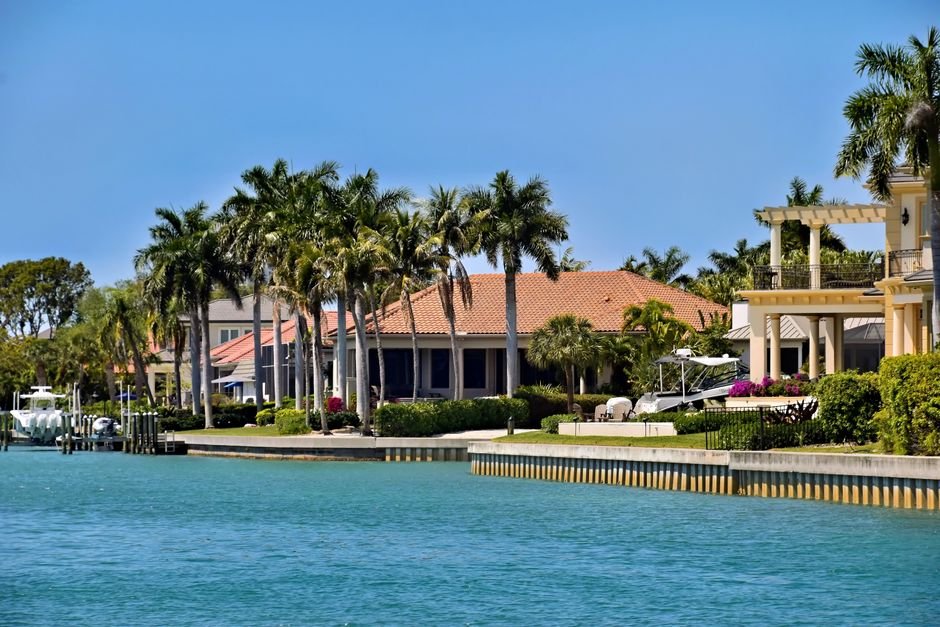
Cape Coral has over 400 miles of navigable waterways, more than any other city in the world. That single fact drives rental demand from boaters, anglers, and water-lifestyle seekers who return to the same market year after year. It is not a generic Florida beach town. It is a destination with a very specific, loyal tenant base.
Population growth keeps feeding that demand. Cape Coral crossed 230,000 residents and continues to grow, with in-migration from the Midwest and Northeast showing no signs of slowing. Norada Real Estate Investments named Cape Coral one of the top Florida housing markets for investors heading into 2026, citing its price-to-rent ratio and population trajectory as key drivers.
For investors who want to invest in Cape Coral rental property, the math starts with a median single-family price of $368,995 (Lee County, June 2026 per RPCRA). That entry point gives you real cash flow potential without the $600K-plus price tags you face in Naples or North Bonita Springs.
Market Snapshot
Lee County single-family homes closed at a median of $368,995 in June 2026, with 6,215 active listings and an average of 45 days on market, a buyer-favorable environment that gives investors room to negotiate.
Cape Coral’s cost of living also runs 8%-12% below Miami and Fort Lauderdale, which makes it attractive to long-term tenants who are priced out of South Florida. That demographic shift has added a new layer of stable, year-round rental demand on top of the existing seasonal market. Two income streams. One market.
In Cape Coral, FL, the median single-family home price sat at approximately $368,995 as of June 2026 (RPCRA/FGCMLS data for Lee County). With gross rental yields averaging 6%-9% depending on property type and rental strategy, Cape Coral offers one of the most accessible entry points for rental property investment in Southwest Florida, well below the price thresholds of Naples or Bonita Springs while still drawing strong seasonal demand from boaters and retirees.
Short-Term vs. Long-Term Rentals: Where the Real Money Is in Cape Coral
Short-term rentals (STRs) on waterfront properties in Cape Coral are generating $3,500 to $6,500 per month during peak season (January through April). That is the top of the market. Annual rentals on comparable non-waterfront homes are pulling $2,000 to $2,800 per month, steadier, but significantly lower on a per-month basis.
| Rental Strategy | Typical Monthly Rent | Best Property Type | Est. Gross Yield |
|---|---|---|---|
| Short-Term (Seasonal) | $3,500-$6,500 peak | Waterfront single-family | 7%-9% |
| Short-Term (Seasonal) | $2,200-$3,800 peak | Condo / townhouse | 6%-8% |
| Annual / Long-Term | $2,000-$2,800 | Non-waterfront single-family | 6%-7.5% |
| Annual / Long-Term | $1,600-$2,200 | Condo / townhouse | 5.5%-7% |
The STR premium is real, but so is the management overhead. Vacancy between bookings, cleaning fees, platform commissions (Airbnb/VRBO take 3%-5%), and seasonal income swings all compress your net yield. A well-managed annual lease removes that volatility entirely. The right strategy depends on your risk tolerance and how hands-on you want to be.
Lee County condos and townhouses closed at a median of $238,995 in June 2026 (RPCRA data), which gives condo investors a lower entry point with a still-competitive yield. The trade-off is smaller rental premiums and, in some communities, HOA restrictions on short-term rentals that effectively force an annual strategy.
“A waterfront single-family home in Cape Coral can generate $3,500 to $6,500 per month during peak season, more than double the annual rental rate on a comparable inland property.”
Calculating Your Cape Coral Rental Property ROI in 2026
Gross yield is the starting point, not the finish line. To calculate actual rental property cash flow Cape Coral investors can realistically expect, you need to subtract four major cost categories: property taxes, insurance, property management, and maintenance reserves. Each one has a Cape Coral-specific number you should know before you buy.
- Property Taxes: Lee County’s millage rate for 2025-2026 is approximately 3.5-4.5 mills for non-homesteaded investment properties, depending on the municipality. On a $400,000 home, expect $5,600-$7,200 annually. This is a direct ROI hit that many out-of-state investors underestimate.
- Insurance: Post-Ian, Cape Coral insurance premiums for single-family homes range from $4,500 to $9,000+ annually depending on flood zone, age, and construction type. Waterfront properties carry the highest premiums. Always get an insurance quote before making an offer.
- Property Management: Professional managers in Cape Coral charge 8%-12% of gross rents for annual leases, and 20%-30% for STR management. Budget for it. Self-managing from out of state rarely goes well.
- Maintenance Reserve: Industry standard is 1% of property value per year. On a $400,000 home, that is $4,000 annually set aside for repairs, HVAC, and appliances.
Run those numbers on a $400,000 waterfront home renting at $4,000/month peak seasonal and $2,400/month off-season (assume 10 months occupied): gross annual rent is roughly $38,000. Subtract $7,000 taxes, $6,500 insurance, $7,600 management (20% STR), and $4,000 reserve. Net operating income: approximately $12,900. That is a 3.2% net yield, modest, but appreciation in Cape Coral has averaged 6%-8% annually over the past five years, which is where the real wealth builds.
Important: Always request a current insurance quote and verify the flood zone designation (FEMA FIRM map) before closing on any Cape Coral investment property, flood zone AE properties carry mandatory flood insurance that can add $2,000-$5,000 to your annual cost basis.
Southwest Florida rental property ROI is best understood as a combination of cash flow and appreciation. Pure cash-on-cash returns in Cape Coral are typically 4%-6% net after all expenses on a leveraged purchase. Add 6%-8% average annual appreciation and your total return picture looks considerably stronger than the cash flow number alone suggests.
For investors calculating Cape Coral rental property ROI in 2026, the most important variables are insurance cost, flood zone designation, and property tax rate, three factors that can swing net operating income by $8,000-$12,000 annually on a mid-range investment property. Gross yields of 6%-9% are achievable on waterfront single-family homes; net yields after all expenses typically land at 3%-6% depending on rental strategy and financing structure.
Burnt Store Marina: A Closer Look at ROI in One of Cape Coral’s Best Investment Communities
Burnt Store Marina is the largest deep-water marina community in Southwest Florida, with over 500 wet slips, two golf courses, tennis, fitness, and a waterfront restaurant. Renters do not just want a house here. They want the whole lifestyle package, and they pay for it.
Burnt Store Marina, At a Glance
Burnt Store Marina rental property ROI is driven by a renter profile that is distinctly different from the rest of Cape Coral. These are boaters, golfers, and active retirees who book 4-12 week seasonal stays and often return to the same property year after year. That repeat-tenant loyalty reduces vacancy and marketing costs meaningfully.
The HOA structure here matters for investors. Burnt Store Marina communities have specific rental minimums (typically 30-day minimum stays), which effectively rules out nightly Airbnb-style rentals but still allows lucrative monthly seasonal leases. That 30-day floor actually protects your investment: it keeps the community character intact and supports long-term property values.
A single-family home in Burnt Store Marina purchased at $550,000 and rented at $5,500/month for four peak months and $2,800/month for six additional months generates approximately $38,800 in gross annual rent. After HOA ($600/month), taxes ($8,000), insurance ($7,500), management (10% annual: $3,880), and a 1% maintenance reserve ($5,500), your net operating income lands around $9,420. That is a 1.7% net cap rate, but pair it with appreciation and the marina lifestyle premium, and Burnt Store Marina is an asset that builds wealth steadily over time.
Edis’s Take
“Burnt Store Marina is one of those communities where the lifestyle sells the rental for you. My clients who invest here rarely struggle to find seasonal tenants because boaters and golfers actively seek this community by name. The HOA’s 30-day minimum is not a barrier, it is a filter that attracts exactly the kind of tenant who takes care of a property.”
: Edis Arevalo, Managing Broker · 17 years SWFL real estate
Regulations, Property Management, and Protecting Your Investment
Lee County requires all short-term rental operators to register with the county and collect the 5% tourist development tax on stays under six months. Registration is straightforward, but skipping it exposes you to fines. Florida state law (passed in 2021) limits local governments from banning STRs outright, but HOA rules can, and often do, impose their own restrictions.
Before you buy any Cape Coral investment property, get answers to three specific questions:
- Does the HOA allow rentals, and is there a minimum stay requirement?
- Is the property in a flood zone that requires mandatory flood insurance?
- What is the current insurance quote from a licensed Florida carrier (not a national carrier that may not write in Lee County)?
Professional property management is not optional for most out-of-state investors. A good Cape Coral property manager handles tenant screening, lease enforcement, maintenance coordination, and county tax compliance. The 8%-12% fee on annual rentals is money well spent when you consider the alternative: a self-managed property 1,200 miles away with a maintenance emergency at 2 a.m. in January.
RealEstateNews.com noted in September 2025 that Cape Coral is among the Florida markets offering investors “good ROI and less regulatory red tape” compared to Miami-Dade and Broward counties, a meaningful advantage for first-time investment property buyers who want a simpler compliance environment.
Cape Coral Rental Property ROI 2026: Market Trends and What Comes Next
Lee County single-family inventory sat at 6,215 active listings in June 2026, with 45 average days on market (RPCRA). That is a more balanced market than the frenzied 2021-2022 period, which gives investors negotiating room they did not have two years ago. More inventory means more choices and more realistic sellers.
Market Snapshot
Lee County had 6,215 active single-family listings and 1,345 pending sales in June 2026, a pending-to-active ratio of about 22%, indicating steady demand without the overheated conditions of 2021-2022.
Norada Real Estate Investments highlighted Cape Coral in their June 2026 report “Cape Coral Housing Market 2026: Where Investors Are Finding the Best Deals,” pointing to the city’s price-to-rent fundamentals and continued population growth as the core investment thesis. The Florida housing market broadly maintained its growth streak heading into summer 2026, per Norada’s June analysis, a positive signal for rental demand continuity.
For the Cape Coral real estate market update through June 2026, the story is a market that has normalized without declining. Prices are stable. Rental demand remains strong. And new construction from builders like Pulte and Lennar continues to add inventory in the $350,000-$500,000 range, which also sets a pricing floor that supports existing home values.
Long-term, Cape Coral’s fundamentals are intact. Baby Boomer migration into Southwest Florida continues through the late 2020s. Remote work has permanently expanded the pool of people who can live here year-round. And the canal system is not something any other market can replicate. Those are durable competitive advantages for rental property investors.
Risks and Rewards: A Balanced View of Cape Coral Rental Investments
Cape Coral is a strong investment market. It is not a risk-free one. Three specific risks deserve honest attention from any investor considering this market in 2026.
Hurricane exposure is real. Hurricane Ian (2022) caused significant damage in parts of Cape Coral, particularly in lower-elevation areas near the Caloosahatchee. Properties built after 2002 under Florida’s updated building codes fared significantly better. Prioritize newer construction or post-Ian renovated homes with impact windows, reinforced roofs, and documented repairs.
Insurance costs remain elevated. Some national carriers have exited Florida, and Citizens Insurance (the state insurer of last resort) has been actively depopulating its book. Budget conservatively: $6,000-$9,000 annually for a waterfront home is not unusual. Get quotes from multiple Florida-admitted carriers before you close.
Market softening in the condo segment is worth watching. Lee County condo inventory sat at 2,520 active listings with only 340 pending sales in June 2026, a much softer absorption rate than single-family. If you are buying a condo for investment, the exit strategy matters more than it did in 2021.
The rewards are equally concrete. Appreciation has been consistent. Rental demand is structural, not speculative. And Cape Coral’s waterfront lifestyle is a product that does not go out of style. For investors who do their due diligence and buy the right asset at the right price, the risk-reward profile here is genuinely favorable. Read the Cape Coral Living Guide 2026 to understand what makes this market tick from a lifestyle perspective, because your tenants are buying the lifestyle, not just the square footage.
Frequently Asked Questions
What is the 2% rule in rentals?
The 2% rule states that a rental property’s monthly rent should equal at least 2% of its purchase price to generate strong cash flow. On a
Ready to Talk
Work With a Local Cape Coral Expert
Edis Arevalo has 17+ years in Southwest Florida real estate. Free consultation, no pressure, just straight answers about your situation.
Contact Edis, Free Consultation